Guides · how many calories are in a tablespoon of peanut butter
How many calories are in a tablespoon of peanut butter?
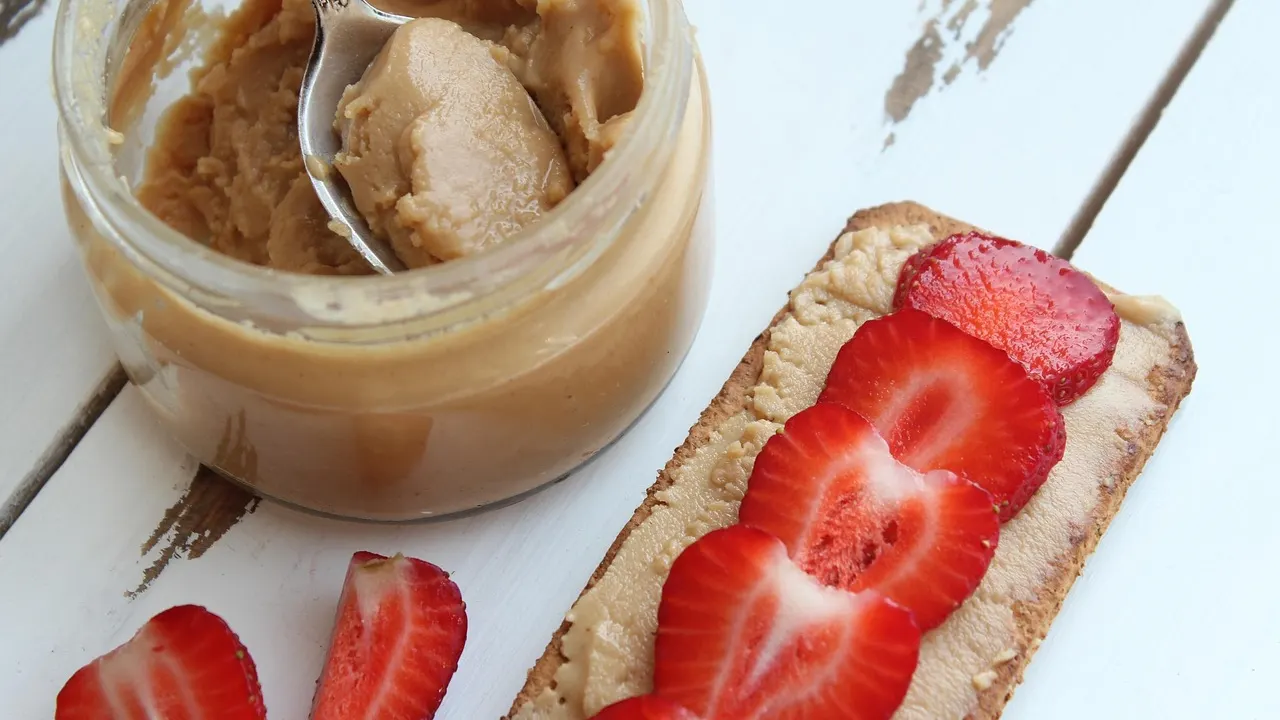 ≈96 cal/tbsp
A level tablespoon of peanut butter is about 96 calories (≈), USDA figures show. That's half of what the FDA treats as a standard serving: 2 tablespoons (32g), about ≈191 calories. Natural and regular peanut butter land in almost the same place, calorie for calorie.
The numbers
USDA FoodData Central lists plain, smooth peanut butter without salt at about ≈598 calories per 100g, with about ≈22.2g protein, ≈51.4g fat and ≈22.3g carbohydrate. USDA also gives two household weights directly: 2 tablespoons at 32g, and 1 cup at 258g. Here's what that works out to:
| Amount | Weight | Calories (≈) |
|---|---|---|
| 1 tablespoon | 16 g | 96 |
| 2 tablespoons | 32 g | 191 |
| 1 cup | 258 g | 1,543 |
The 2-tablespoon and 1-cup rows are USDA's own listed portions. The 1-tablespoon row is simply half of the 2-tablespoon one.
Why the label says 2 tablespoons, not 1
The FDA doesn't pick serving sizes arbitrarily. Under 21 CFR 101.12, nut and seed butters have an official "reference amount customarily consumed" of 2 tablespoons. Regulators set that from national food surveys of what people actually eat in one sitting. Peanut butter is one of the few spreads where the "real" serving on the jar is already bigger than one flat tablespoon.
A real scoop from the jar makes this harder to judge. Peanut butter is thick and sticky, so a spoon dipped in and pulled back out rounds up past level far more easily than a pour of oil or a scoop of yogurt does. There's no official number for how much a heaping spoonful adds, but it's a common way to eat noticeably more than one measured tablespoon without realizing it.
Natural vs regular: same calories, different everything else
Peanut butter sold as "natural" usually means fewer additives, not fewer calories. The National Peanut Board's own comparison of a 2-tablespoon serving shows both regular and natural peanut butter at 16g of fat, the number that drives most of the calories in either one. The differences show up elsewhere: natural runs about 2g of saturated fat against 3g for regular, no sodium against about 5mg, and roughly 1g of sugar against 3g, with protein running a little higher in the natural version.
None of that moves the calorie count by much. If you're choosing between jars over sodium or added sugar, that's a fair reason. If you're choosing a jar to cut calories, it won't help, because the oil that separates on top of natural peanut butter is still peanut oil, and it still counts.
A worked example
Say you make two slices of peanut-butter toast, spreading 1 tablespoon on each. That's 2 tablespoons total, USDA's own serving size, about ≈191 calories from the peanut butter alone, before the bread. Spread the same 2 tablespoons thickly on a single slice instead, and the peanut-butter calories don't change. Only how they're split across the meal does. What actually changes the total is whether you used a measured tablespoon or a jar-dipped "spoonful." The second one is where the extra calories hide.
Harvard Health Publishing puts it plainly: two tablespoons of peanut butter give about 7g of protein, "but also fat and calories, so go easy on serving sizes."
Common mistakes
- Trusting a tablespoon figure without checking the source. Different database pages round the per-100g figure differently, and the error compounds once you scale it to a tablespoon.
- Assuming natural peanut butter is meaningfully lower in calories. The main difference is additives, not energy, as the fat content barely moves.
- Logging a jar-dipped "spoonful" as one measured tablespoon. A sticky scoop is often more than level, even when it looks like one spoonful.
What to do instead
- Use a measuring spoon, levelled with a knife edge, when you want the 1-tablespoon number to be accurate.
- Check the label's own serving size, usually 2 tablespoons (32g), before comparing brands or flavours.
- Pick "natural" peanut butter for less sodium or added sugar, not to cut calories, since the calorie difference is small.
- See peanut butter for the full USDA breakdown by weight, the tablespoon of olive oil guide for how another fat-dense food compares, and the protein calculator to see how peanut butter's protein fits your day.
Quick answers
how many calories are in a tablespoon of peanut butter
About ≈96 calories. USDA FoodData Central lists smooth peanut butter without salt at about ≈598 calories per 100g, which works out to about ≈96 for a 16g tablespoon.
what is the fda's serving size for peanut butter
Two tablespoons (32g), about ≈191 calories. That is the 'reference amount customarily consumed' set in 21 CFR 101.12 for nut and seed butters, based on national food survey data.
does natural peanut butter have fewer calories than regular
Barely. A National Peanut Board comparison of 2-tablespoon servings shows both versions at the same 16g of fat. The real differences are less sodium, less sugar and slightly more protein in the natural version, not fewer calories.
how many calories are in a cup of peanut butter
About ≈1,543 calories, scaling USDA's ≈598-calories-per-100g figure to its own listed cup weight of 258g.
Sources
- USDA FoodData Central, SR Legacy: Peanut butter, smooth style, without salt (FDC ID 172470)
- US FDA / govinfo, 21 CFR 101.12, Table 2: Reference amounts customarily consumed
- Harvard Health Publishing: High-protein snacks to build muscle and keep hunger at bay
- National Peanut Board: Mythbusters - Natural Peanut Butter vs. Regular Peanut Butter
General information, not medical advice. Calorie figures are estimates and vary by person.
Keep reading
- what are calories in foodWhat is a calorie, and why do foods vary so much?A calorie is a unit of energy. Protein and carbs give about 4 calories per gram, fat about 9, and alcohol about 7, which is why foods vary so much.
- how many calories are in a tablespoon of olive oilHow many calories are in a tablespoon of olive oil?One tablespoon of olive oil is about 119 calories, a teaspoon about 40, and two quick glugs in a pan about 240. Here is how to measure oil without guessing.
- how many calories are in honey vs sugar per teaspoonHow many calories are in honey vs sugar per teaspoon?A teaspoon of honey has about ≈21 calories, sugar about ≈16, and maple syrup about ≈17, per USDA data, because honey is a denser liquid.