Guides · how many calories are in a hard-boiled egg vs a fried egg
How many calories are in a boiled egg vs a fried egg?
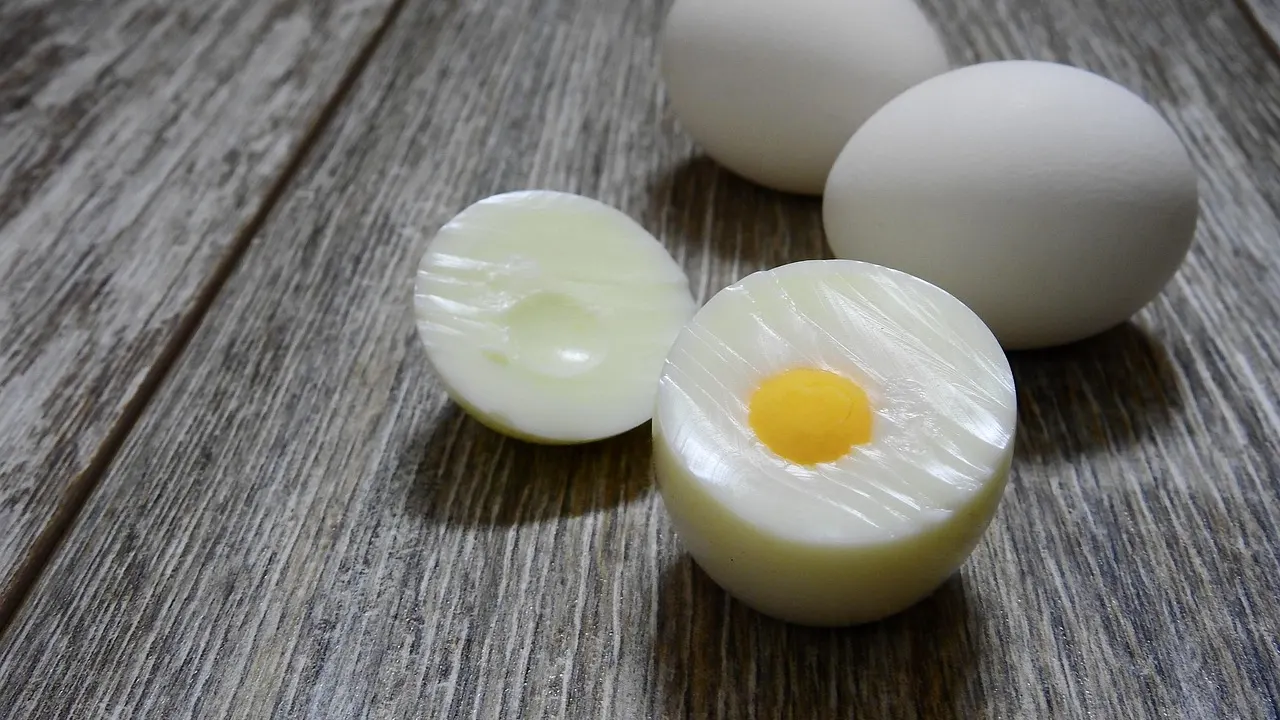 78 vs 90 cal
A large hard-boiled egg is about ≈78 calories. The same size egg, fried, is about ≈90. That gap is small, because the egg itself barely changes when you cook it. What really moves the number is how much butter or oil you fry it in.
The evidence
USDA FoodData Central lab-tests both foods. A raw, large egg (50 g) is about ≈72 calories, from a per-100 g value of 143. Hard-boiled, the same size egg is about ≈78 calories, from 155 per 100 g. Fried, USDA's lab sample works out to about ≈90 calories for a large egg (46 g), from 196 per 100 g. These are analytical values from food samples, not a clinical study, so treat each number as a sound average rather than an exact figure for any one egg you cook.
Harvard Health's nutrition guide puts a raw egg at about 70 calories, which lines up closely with USDA's ≈72. Its only cooking advice on calories is to reach for poached or hard-boiled eggs, or a little olive oil, rather than eggs fried in butter — without putting a number on the difference. That is the gap this guide fills in.
What it means in practice
Say you cook two eggs for breakfast. Boiled, that's about ≈156 calories (2 × 78), no fat needed. Fried in a bare nonstick pan, close to USDA's lab figure, you're near ≈180 (2 × 90). Add your own measured fat and the number moves again: a teaspoon of olive oil is about ≈40 calories (4.5 g, USDA), and a tablespoon of butter is about ≈102 (14.2 g, USDA). Two eggs fried in a full tablespoon of butter can land closer to ≈260–280 once you add the butter's calories on top of the eggs' own. The eggs barely changed. The fat did the work.
Why boiled and fried aren't that different
Boiling and poaching are water-based cooking, so Harvard Health's guidance treats them as adding close to zero calories. The small rise from raw (≈72) to boiled (≈78) in USDA's data is mostly water loss: a little moisture escapes through the shell's pores during boiling, so the same protein and fat end up packed into slightly less weight. That's the same pattern seen in cooked meat and vegetables, just much smaller in an egg, because the shell holds most of the water in.
Frying is different only because a pan usually has fat in it. USDA's fried-egg sample already reflects some absorbed fat, which is why it reads higher than boiled even before you add anything yourself. But that lab sample used far less fat than a home cook typically pours, which is why real fried eggs can land well above ≈90.
Common mistakes
- Treating "fried" as one fixed number. A fried egg's calories depend on the fat, not just the method. A dry nonstick pan, a teaspoon of oil, and a tablespoon of butter are three different meals.
- Not counting the fat at all. Oil and butter are easy to pour by eye and easy to forget in a food log, and they often add more calories than the egg they're cooking.
- Assuming oil is automatically lighter than butter. Per gram, olive oil (≈884 per 100 g) has more calories than butter (≈717 per 100 g). The amounts used are usually small for either, so it's the quantity, not the choice, that matters most.
What to do instead
- Measure the fat, don't pour it. A level teaspoon of oil or a single pat of butter (≈36–40 calories) keeps a fried egg close to a boiled one.
- Use a nonstick pan or a light spray when you want the lowest-calorie fried egg.
- Pick boiling or poaching when you're watching the total closely; both add almost nothing beyond the egg itself.
- Weigh your eggs if the size is unusual. USDA's figures are for a 50 g large egg; a 63 g jumbo egg carries noticeably more. See the egg page and the hard-boiled egg page for the full USDA breakdown, and butter and olive oil for what a pat or a tablespoon of each actually costs. For more on the oil side, the tablespoon of olive oil guide has the full table.
Quick answers
How many calories are in one fried egg?
About ≈90 calories (≈) for a large egg, per USDA's lab analysis of a fried whole egg. That figure already includes a small amount of absorbed cooking fat, but not whatever extra oil or butter you add yourself at home.
Does boiling an egg add any calories?
No. Boiling and poaching are water-based, so they add about zero calories. The small rise from a raw egg (≈72) to a boiled one (≈78) is water loss concentrating the same nutrients into less weight, not new energy.
Is butter or olive oil worse for calories when frying an egg?
Gram for gram, olive oil has more calories than butter: ≈884 per 100 g versus ≈717 (USDA). But the amounts people use are small and similar, so how much fat you pour matters far more than which one you choose.
Why do fried-egg calorie counts vary so much online?
Because a fried egg isn't one fixed food. A dry nonstick pan, a teaspoon of oil and a tablespoon of butter are three different amounts of added fat, and each changes the total by tens of calories.
Sources
- USDA FoodData Central, SR Legacy: Egg, whole, raw, fresh (FDC ID 171287)
- USDA FoodData Central, SR Legacy: Egg, whole, cooked, hard-boiled (FDC ID 173424)
- USDA FoodData Central, SR Legacy: Egg, whole, cooked, fried (FDC ID 173423)
- USDA FoodData Central, SR Legacy: Butter, salted (FDC ID 173410)
- USDA FoodData Central, SR Legacy: Oil, olive, salad or cooking (FDC ID 171413)
- Harvard Health: Eggs, protein, and cholesterol — how to make eggs part of a heart-healthy diet
General information, not medical advice. Calorie figures are estimates and vary by person.
Keep reading
- how many calories in a cup of greek yogurtHow many calories in a cup of Greek yogurt?Plain Greek yogurt runs about 59 (nonfat) to 97 (whole milk) calories per 100g, USDA data shows. Unlike regular yogurt, it has no single USDA cup weight.
- how many calories are in chicken breast raw vs cookedHow many calories are in chicken breast, raw vs cooked?Raw chicken breast is about 120 calories per 100 g; cooked (roasted) it is about 165, because cooking drives out water, not energy.
- almond milk vs 2 percent milkAlmond milk vs 2% milk: which has fewer calories?Unsweetened almond milk runs about ≈15 calories per 100g versus ≈50 for 2% milk, but 2% milk has about eight times the protein — the full trade-off here.